

Considering America Through the Album Cover
The conversation and controversy of the red, white, and blue.


Get music history, news, and stories straight to your inbox when you subscribe to the Rock & Roll Hall of Fame Substack.
Written by Rachel Cabitt, a photographer, designer, and art director based in New York. Rachel is the co-founder of POND Creative, a visual studio for the music industry. She publishes The Art of Cover Art, a newsletter on the art history of album covers, and has written for It’s Nice That, Wallpaper*, and AIGA Eye on Design on the medium.

Putting an American flag on an album cover has rarely been a flippant decision. It’s a visual statement that begets conversation and controversy. Some covers like Hüsker Dü’s “Land Speed Record” and Ice Cube’s Death Certificate boldly juxtaposed the flag with death, depicting the symbol draped over coffins and a lone corpse. Whereas the cover for The Black Crowes’ Amorica., was heavily censored for cheekily featuring a close-up of a woman’s crotch donning an American flag bikini, pubic hair poking out (funnily enough, the record was released on American Recordings, a label founded by Rock Hall inductee Rick Rubin). Years later, lead singer Chris Robinson still baffled at the public response, lamented, “To me, it was a pop art statement. It was hilarious.”
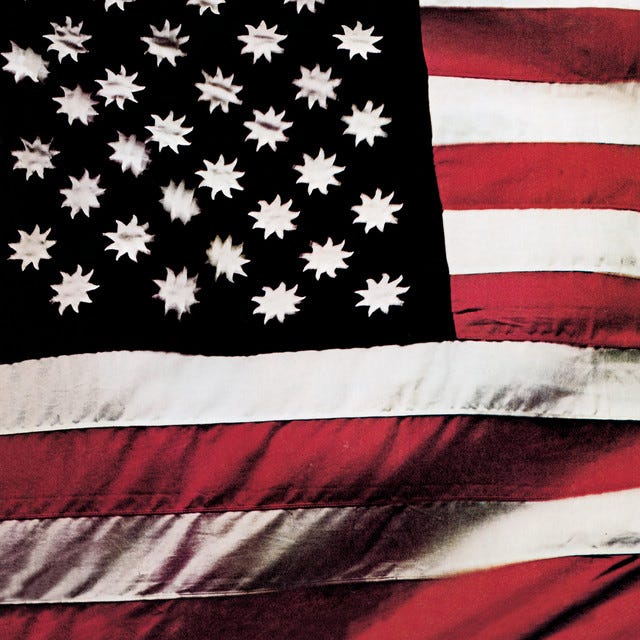
Two decades later, in 1971, Sly & The Family Stone released There’s a Riot Goin’ On (a haunting response to Marvin Gaye’s What’s Going On). According to The New Yorker’s Hanif Abdurraqib, the album was “not necessarily pessimistic,” or “explicitly political” but “tinged with a kind of cynicism that seemed to be overtaking the country.” Martin Luther King Jr. had been assassinated a few years earlier, the country was in the throes of the Vietnam War, and Sly was battling his own addictive demons. Former drummer of the band, Greg Errico, told The Guardian, “the music was darker because times were darker.” The artwork reflects that ominous energy, featuring an edge-to-edge image of a black, white, and red American flag, with suns for stars, blowing in the wind. No title or artist name fills the canvas, a lark for that time, letting the image brazenly be.
At first glance, the album cover for Bruce Springsteen’s 1984 record Born In The U.S.A is a starkly patriotic image. We see the backside of the musician in a classic blue-collar uniform, white t-shirt and blue jeans, with a red cap hanging out of the back pocket. Against the red-and-white stripes of the American flag, with his identity obscured, Springsteen could be any average American. In this instance, he is an American with a lot to tell his government.
The record itself was a deep criticism of Reagan and the US government’s treatment of veterans after the Vietnam War. Many have mistaken the true meaning behind Springsteen’s record including, most ironically, the president himself. While on the campaign trail in 1984, Reagan stated, “America’s future rests in a thousand dreams inside your hearts. It rests in the message of hope in songs of a man so many young Americans admire, New Jersey’s own Bruce Springsteen.”
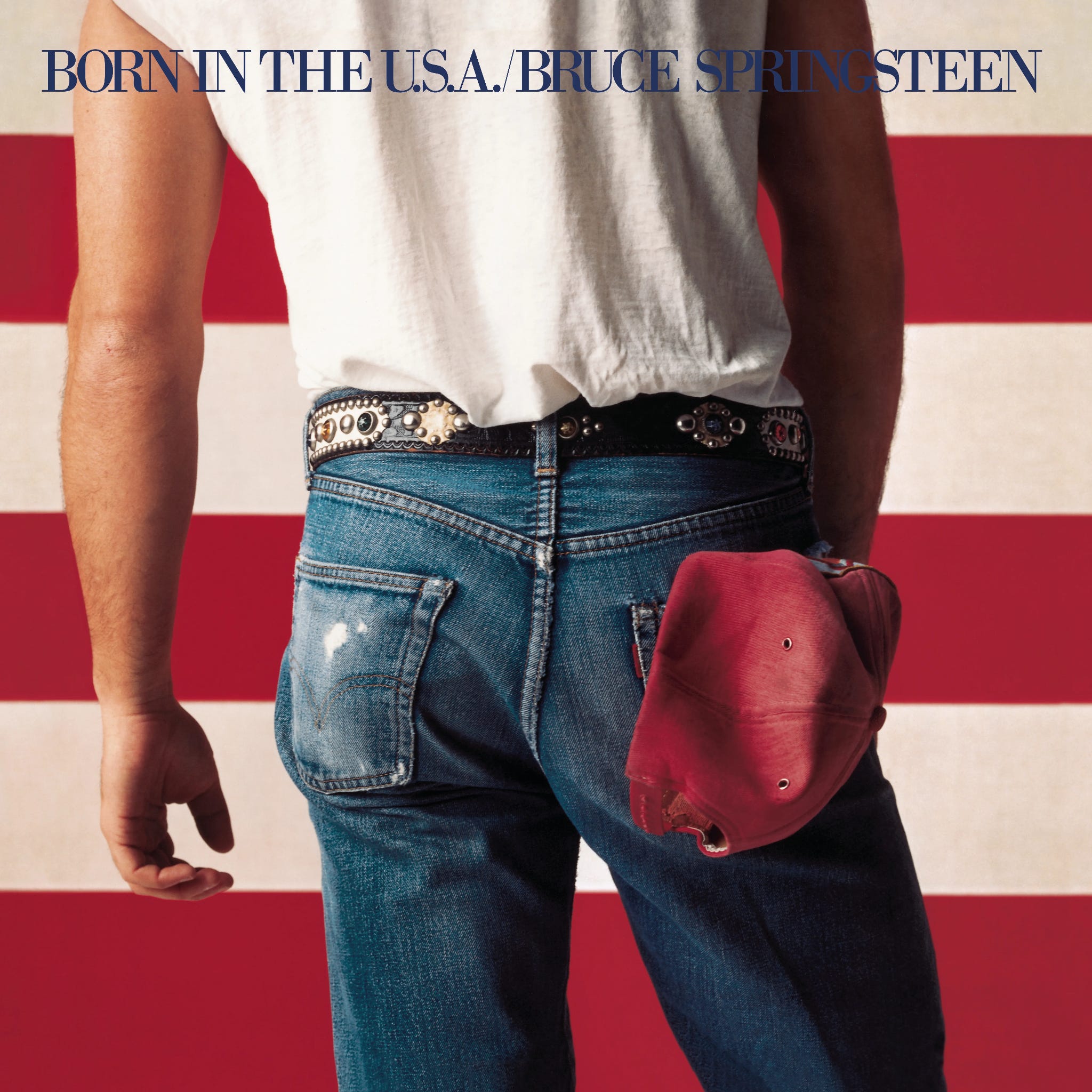
In a recent interview with PBS, Springsteen stated, “I believe in critical patriotism. I believe that’s the definition of a patriot. That you love your country so much that you’re willing to look at it clearly, recognize its faults, and encourage it to be a better place.” Photographed by Annie Leibovitz, this album cover is an unexpectedly political image.
While Sly & Bruce featured the American flag on full display, many artists these days have leaned toward using the national symbol in a more subtle fashion on their covers. Blink twice, and you might just miss the American flag on the cover of Kendrick Lamar’s sophomore album, To Pimp a Butterfly. Captured by French photographer, Denis Rouvre, you’ll find the rapper in the center of a crowd, holding a baby, mouth ajar in enthusiasm. Around him, friends, who Lamar sang about on good kid, m.A.A.d city, rejoice, holding stacks of bills out to the camera. Below them lies a white judge presumed dead with Xs drawn through his eyes.
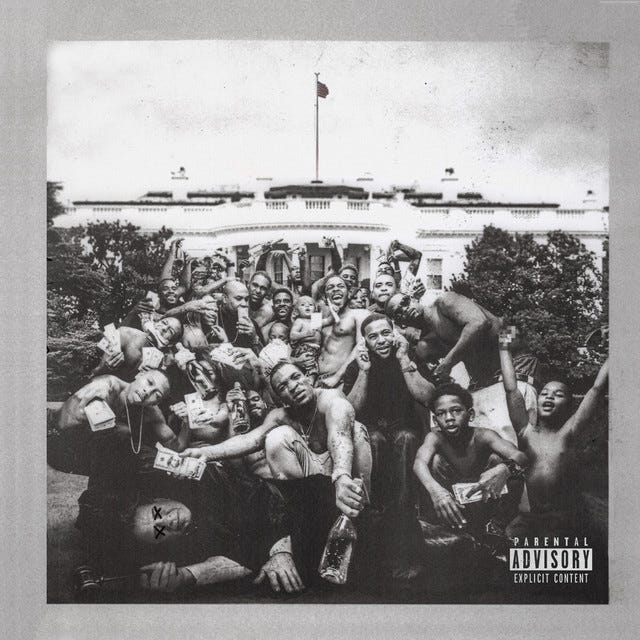
In an interview with Mass Appeal, Lamar explains, “You look at these individuals, and you look at them as bad people or a menace to society, but they’re actually good people, just a product of their environment. And the one person that always represents their life negatively is the judge. Only God can judge these individuals right here, not no one with a gavel.” The image, weighed down by the group’s excitement, finds balance in the white expanse of the sky up top, where the American flag acts as the cherry on top of this revolutionary image.
The cover of Beyoncé’s ninth album, Cowboy Carter, leans heavily on American tropes to make a point. A sister image to the album cover for her prior record, Renaissance (which also features the singer on a horse), the artwork shows Knowles, this time dressed as a cowgirl, riding a white stallion side-saddle. As the biggest pop star in the world, the internet had a lot to say about the singer’s decision to brand an American flag on her cover during such a politically fraught time. As Rolling Stone writer Andre Gee eloquently stated, “Imagery can make a political statement, but when onlookers don’t fully grasp your political lens, they can sometimes backfire. When artists don’t dictate their intent, political symbolism becomes whatever the viewer chooses it to be — and maybe that’s her goal.”
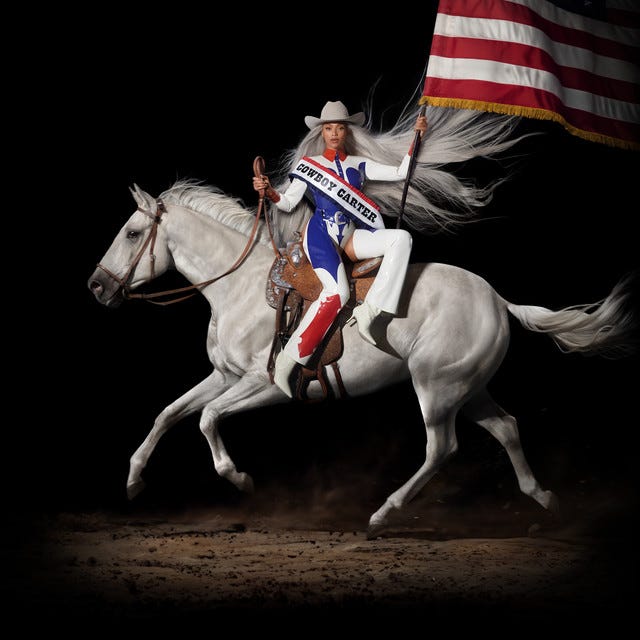
But while many expected Beyoncé to make a political statement, as so many American flag album covers have done in the past, she stated her intentions clearly in an Instagram post. “This album has been over five years in the making. It was born out of an experience that I had years ago, where I did not feel welcomed…and it was very clear that I wasn’t. But, because of that experience, I did a deeper dive into the history of Country music and studied our rich musical archive.” Most likely referring to the 2016 incident at the CMAs where she performed alongside The Chicks, Beyoncé drew inspiration from unrecognized stories like Texas’ Black Cowboys and country singer Linda Martell to challenge the country establishment. Using the flag as a visual tool, she reminded the genre that it is much more diverse than the white artists it mainly promotes. Like all musicians who have claimed an American flag album cover before her, Beyoncé considers what it means to wave the red, white, and blue.
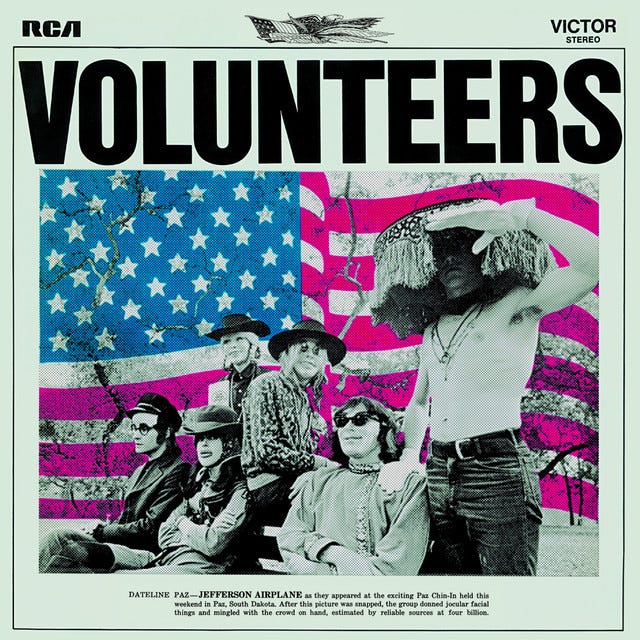
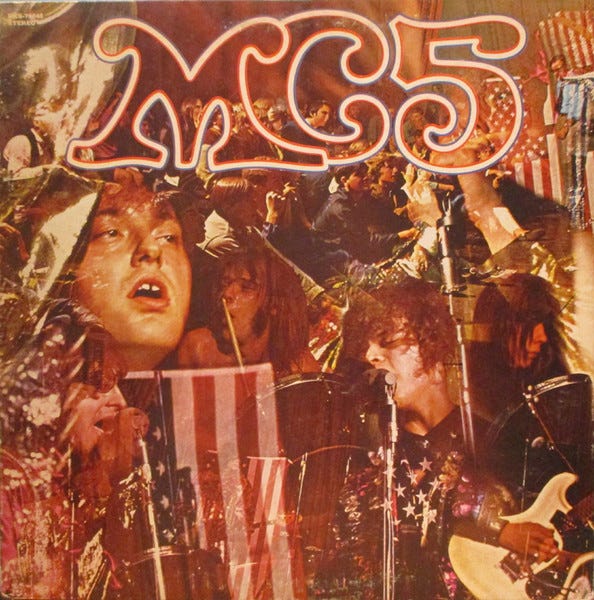
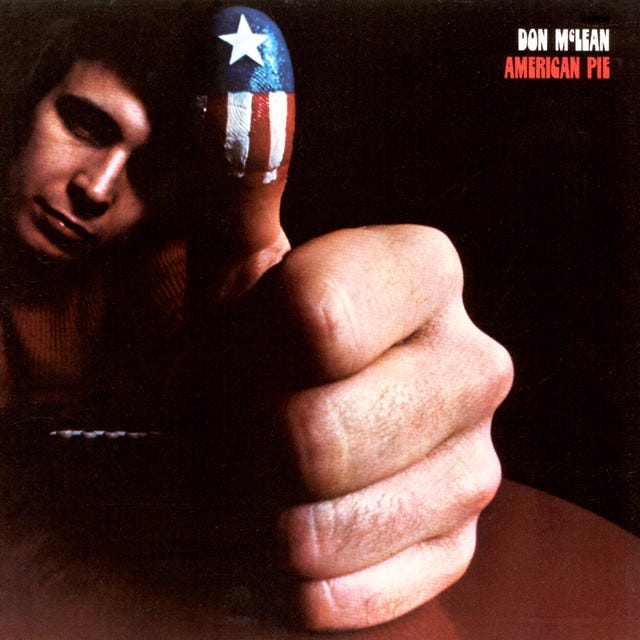
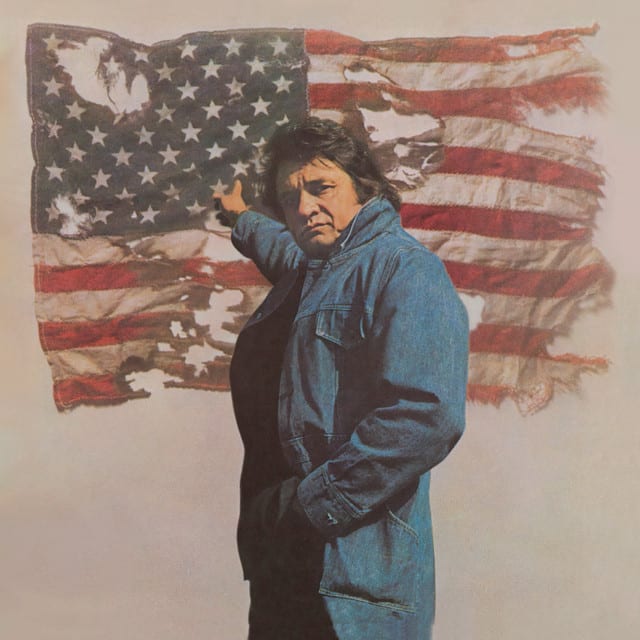
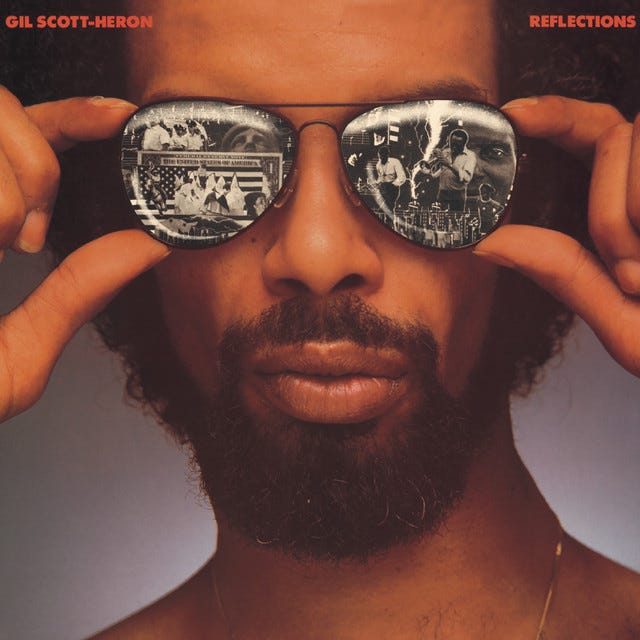
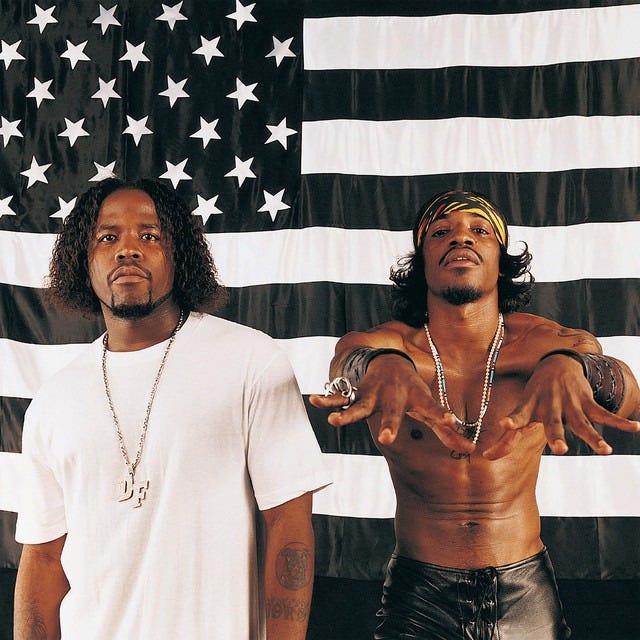
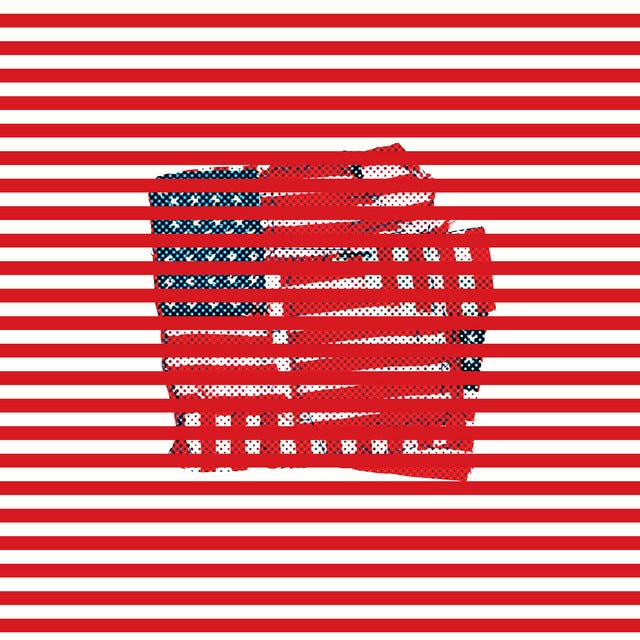
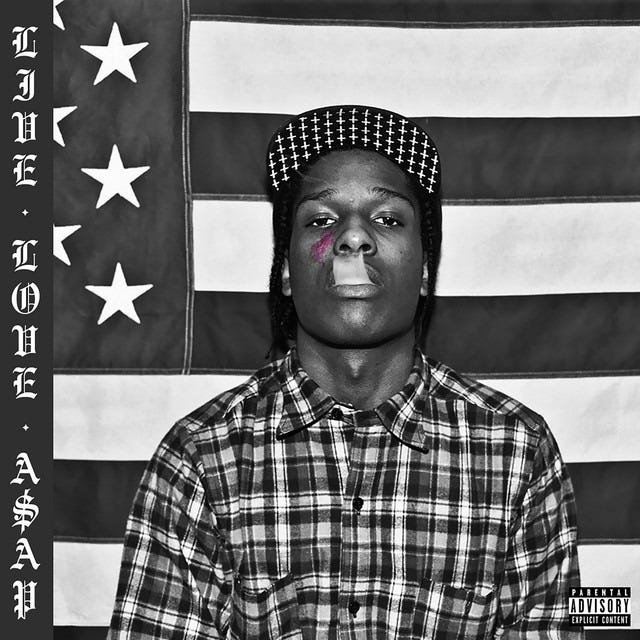
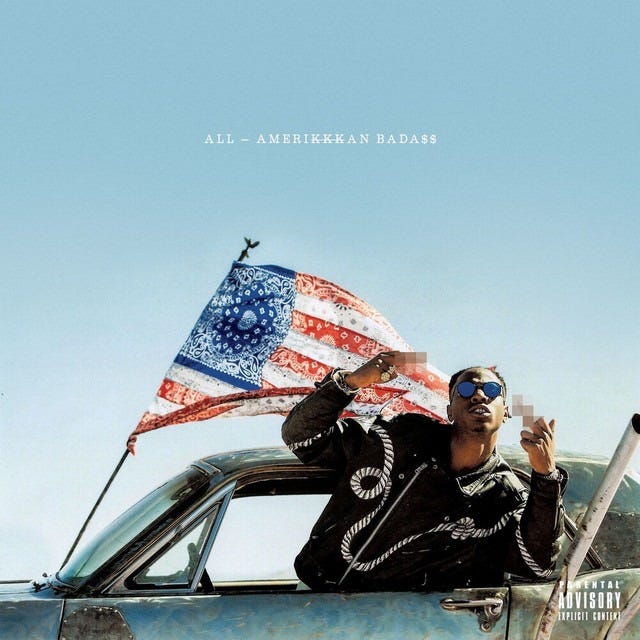
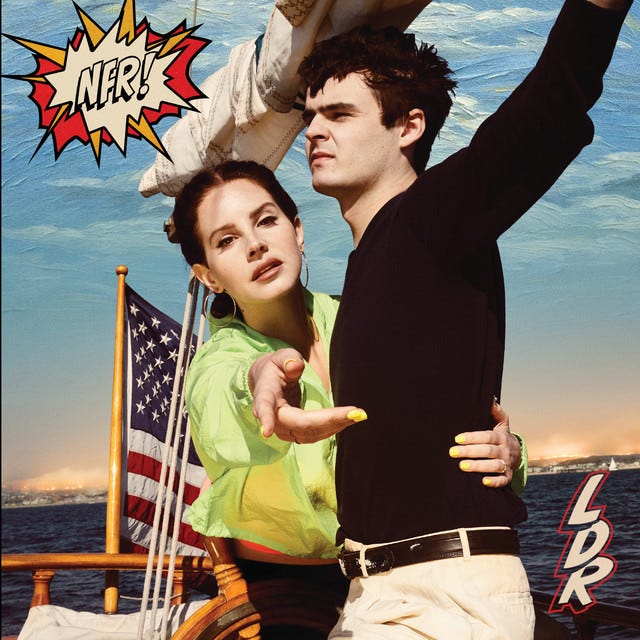
See more American flag album covers below:
Thanks for reading! Get music history, news, and stories straight to your inbox when you subscribe to the Rock & Roll Hall of Fame Substack.
 | A guest post by
|