



Get music history, news, and stories straight to your inbox when you subscribe to the Rock & Roll Hall of Fame Substack.
Written by Ray Padgett, a music journalist based in Burlington, Vermont who writes the Substack newsletters Every Tom Waits Song and Flagging Down the Double E’s. His books include Pledging My Time: Conversations with Bob Dylan Band Members, Cover Me: The Stories Behind the Greatest Cover Songs of All Time, and a book in the 33 1/3 series about tribute albums and Leonard Cohen.
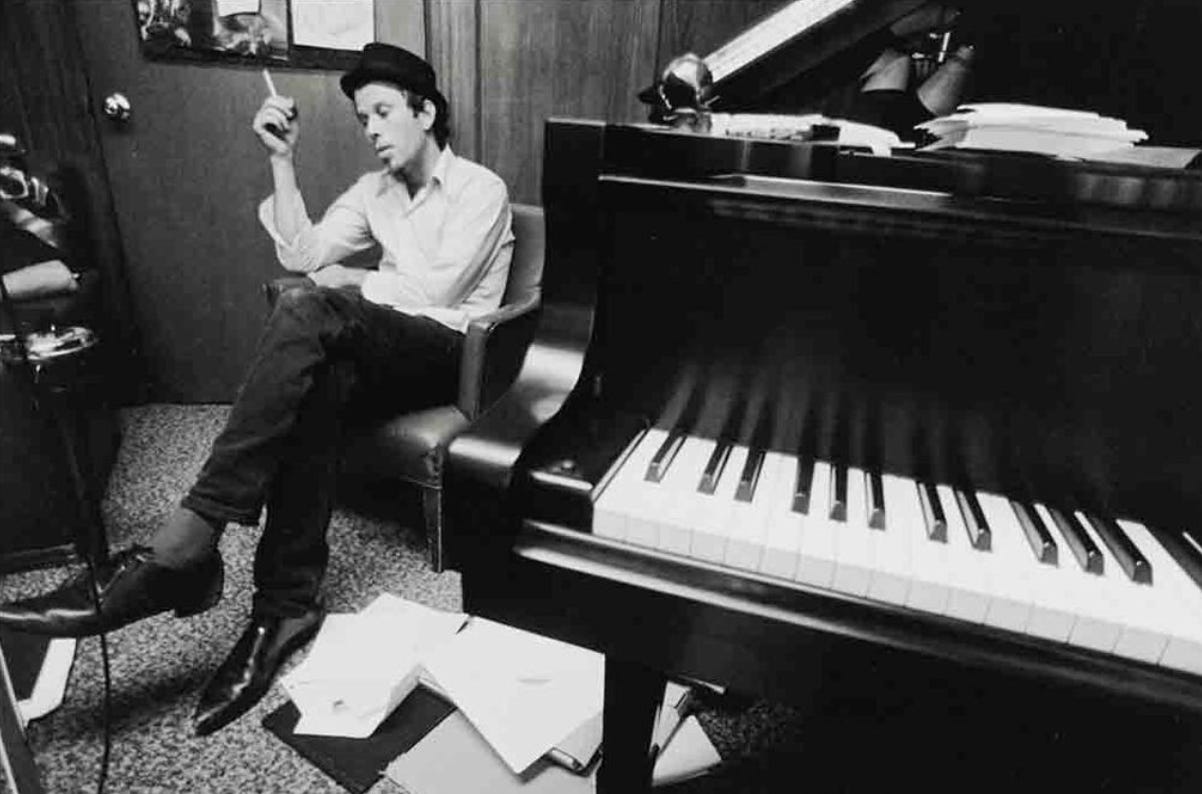
Last week, Tom Waits followed up his first new original song in years: “Boots on the Ground,” a collaboration with Massive Attack — I interviewed one of his collaborators about it — with a new spoken-word piece called “The Fly.” And if you think this must surely be his first spoken-word release about insects, I point you to “Army Ants.”
Waits will almost certainly not play any shows in support of his new songs. Unannounced, he seemingly retired from the road after two 2008 tours (where, in a typical Waitsian flourish, the tour routes were determined by constellation shape — Hydra for America, Eridanus for Europe). He still works as an occasional film actor, playing characters with names like Hermit Bob, but rarely appears on the stage. He has not played a single full concert since that final tour.
One of the only times he’s performed music live in the last 18 years was for the Rock and Roll Hall of Fame. Waits was inducted in 2011 and emerged to perform four songs and give a speech. And what a speech it was.
Anyone who’s ever read a Tom Waits interview knows he’s a born raconteur. He’ll dissemble, obfuscate, go on wild tangents — anything except actually tell you what his songs mean — but he does so with such flair and panache he gets away with it. Following a charmingly rambling intro from Neil Young, Waits’ induction speech includes plenty of hilarious lines. A few of my favorites:
“They say that I have no hits and I’m difficult to work with. And they say that like it’s a bad thing.”
“I’d like to thank my family. They know me and they love me anyway.”
“The only thing I really can compare this to, is I was given the key to the city of El Paso several months ago. It was a really kind offer. They told me there’s only one key to the city of El Paso. I found out later there were a whole lot of them, and that they fit nothing. So I’m just hoping that there are some fringe benefits that go along with this baby here.”
“Thank you, Neil. This has been very encouraging.”
The jokes, however, did not hide how moved he was to be up there. Family was clearly on his mind that night. The camera at one point cuts to his wife and collaborator Kathleen Brennan with tears on her face, and his son Casey played drums for his performance. Plus, when Waits’ induction was first announced, he talked about how much it would have meant to his mom, who had died the previous year. “I wish she was alive to hear the news,” he told Rolling Stone. “She didn’t respond to rock and roll per se, but she would have loved to have a reason to get all dolled up.”
The whole thing is one of my favorite Rock Hall induction speeches, and it’s followed by an equally powerful performance. For the occasion, Waits brought back some of his greatest collaborators, led by Marc Ribot, who played his wonderfully skronky guitar on some of Tom’s most iconic albums, and David Hidalgo of Los Lobos. They performed four songs. None were hits, to the extent Waits even has “hits” (he does, but mostly in the mouths of other performers: “Ol’ 55” for the Eagles, “Downtown Train” for Rod Stewart, etc). But they showcased just what makes Waits special.
Fans often divide Waits’ career into two — the early beatnik-jazzbo piano player, and the later crazed-experimental shouter. Waits himself has quoted his wife saying he writes two types of songs: Grim Reapers and Grand Weepers. The first two numbers come from the Grim Reapers. First, he puts on his demonic-preacher persona for “Make It Rain,” hollering and stomping and shaking while Ribot slashed away. “Rain Dogs,” which followed, showed his skill as a bandleader, using his raised acoustic guitar to guide the band through the song’s sudden dynamic shifts.
Then he moves to piano to play a song from that second category: A Grand Weeper. As he tinkles the keys to warm up, though, an army of stage hands push the piano into position, right out from under his fingertips. The baleful look he gives the audience gets a big laugh.
Watching him subsequently croon “House Where Nobody Lives,” you could imagine Waits back at some smoky jazz bar in the 1970s, even though this particular Weeper came from two decades later. His anecdote setting up the song seems like it will be his origin story — his Rosebud, the skeleton key that unlocks why he does what he does. But, Waits being Waits, the story veers in an unexpected direction:
“This is just like the piano that my mom got me. She worked nights at a cafe. She used to walk home late at night and she would see this piano in a music store window. It was Christmastime and she just thought, ‘That’s for Tom.’ So it was Christmas eve, all the lights were blinking, there was snow falling… She put a brick through the window, and she got that piano for me.
The best part: She only did seven years. She was a good mom. From jail.”
Finally, the showstopper finale: “Get Behind the Mule” accompanied by Neil Young.
Young was an unexpected but inspired choice. He has never worked with Waits. They haven’t shared a stage before or since. But they’ve traced parallel careers, always following their own muses, not caring whether that path led to hits or detours. (Fittingly, the only other extended performance Waits has given since his touring retirement was at a Neil Young Bridge School benefit in 2013.)
While Young strums along on acoustic, Waits growls, whistles, and even beatboxes. My favorite camera shot of the whole program is the two of them hunched low over their guitars, watching each other from across the stage. They’re not smiling exactly, not celebratory. They’re focused, ignoring the crowd of celebrities, intent on creating something magical in the moment
My second favorite camera shot comes at the end. The broadcast cuts to Bruce Springsteen and Bette Midler applauding. Just two more famous people, right? Not quite. The two artists have deep connections to Waits. Springsteen is one of those who introduced a Waits song — “Jersey Girl” — to a much wider audience. And Midler and Waits collaborated (and briefly dated) in the 1970s. Both artists are probably more “famous” than Tom Waits by conventional metrics. They’ve certainly recorded bigger hits. But seeing the respect they have for him in that moment showed why Waits earned his place in the Hall.
Why one of the great live performers of our era mostly quit after this is one of the many mysteries about the man. Though never count him out — if he’s back to recording, maybe a long-awaited return to the stage is next.
Thanks for reading! Get music history, news, and stories straight to your inbox when you subscribe to the Rock & Roll Hall of Fame Substack.